Plug-In Solar: Where It's Legal, What It Costs, and the Outage Catch
Quick answer
Plug-in solar — one to four panels and a microinverter that feeds power into an ordinary wall outlet — is a bill-cutting device, not backup power. Every plug-in system is required to shut off the instant the grid fails, so during an outage it produces exactly nothing, even at noon in full sun. Where it's legal (ten states have passed plug-in solar laws; California's takes effect January 1, 2027), an 800W setup offsets roughly 900–1,200 kWh a year, worth about $125–$370 a year depending on your state's electricity rates. If lower bills are the goal and your state allows it, the one complete kit with a real Amazon listing is the
Check price: Pluggedsolar 800W Kit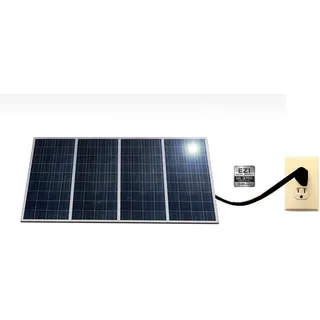
and the DIY route runs through a microinverter and commodity panels — in two certification tiers that this page labels rather than blends: UL 3700-certified (Tier 1, the recommendation) and UL 1741-listed (Tier 2). If keeping the fridge, lights, and furnace fan running through a blackout is the goal, you want a battery instead — start with our portable power station comparison and the generator size calculator.
How plug-in solar works
A plug-in (or "balcony") system is deliberately simple: solar panels make DC power, a microinverter converts it to AC, and a cord plugs into a standard 120V outlet. Your home consumes that power first — whatever your house is drawing at that moment comes from the panels before it comes from the grid — and any surplus flows out through your meter. There is no electrician, no permit, and no utility interconnection agreement in the states that have legalized it; that absence of paperwork is the entire point of the category. Panels mount on a balcony railing, a fence, a patio, or a small ground rack, which is why renters are the core audience in Europe, where millions of these are already installed.
Two limits define the category. First, size: state laws cap plug-in systems at 1,200W of inverter output (Colorado allows 1,920W), so this is a supplement, not a whole-home supply. Second, it doesn't "run" specific appliances — it shrinks your home's total draw while the sun shines, and it does nothing at night.
The outage catch — read this before buying for the wrong reason
This guide sits on a backup-power site for one reason: the most common misunderstanding in this category deserves a plain answer. Plug-in solar does not work during a power outage. Grid-tie inverters are required — by the UL standards they're certified to, and by every state plug-in law — to stop energizing your home's wiring within moments of a grid failure. The feature is called anti-islanding, and it exists to protect utility line workers from a circuit they believe is dead. It is not a setting you can turn off.
So a plug-in kit will not keep your refrigerator cold, your well pump running, or your Wi-Fi up in a blackout, no matter how bright the day is. Anyone shopping for outage protection who buys plug-in solar has bought the wrong tool.
The one exception is a different product wearing similar clothes: battery hybrids such as EcoFlow's STREAM Ultra pair the plug-in inverter with a 1.92 kWh battery, so stored energy can power devices when the grid is down. At roughly $1,399–$1,899 (EcoFlow's own store; its plug-in use is currently offered for Utah only), that product is really a small power station that also plugs in — compare it against the power stations, not against panel kits.
Where it's legal, as of November 2026
Every US plug-in law so far follows the template of Utah's HB 340 (2025): systems up to 1,200W, equipment certified by a recognized testing lab, and no utility pre-approval or interconnection agreement.
- In effect now: Utah, Maine, Maryland, Vermont, Connecticut, and Colorado (1,920W cap).
- Signed, taking effect in 2027: California (January 1), Virginia (January 1), New Hampshire (January 1), and New Jersey (March 1).
- Everywhere else: no plug-in law yet. Feeding power into an outlet without a utility interconnection agreement is not sanctioned in those states, whatever a listing claims. Bills are moving in roughly a dozen more states, and a federal bill has been introduced.
Even in legal states, two practicalities remain yours: a landlord's permission to mount panels (the laws mainly stop utilities and, in several states, HOAs from blanket-blocking systems), and your own wiring — a plug-in system belongs on a GFCI-protected outlet, ideally a dedicated circuit with nothing else heavy on it.
Certification: the part that actually matters
The microinverter is the safety-critical component — it's the device deciding when to feed your wiring and when to shut off — so certification matters here more than panel brand or a few dollars of price.
The standard written for this category is UL 3700, published by UL Solutions in December 2025. The first certifications followed in 2026 — and they show why this section exists. The cleanest paper trail so far belongs to APsystems' EZ1-LV: CSA Group, a nationally recognized testing lab, holds a certification record for it (CSA Certificate of Compliance 80310017, file 259077) in its interactive plug-in PV equipment class, with conditions citing UL 3700 — a record anyone can look up. (The certificate number is corroborated by two independent trackers who report checking CSA's directory; we have not yet verified it in the directory directly.) Hoymiles' HiFlow Pro line is now fully verified too: CSA Group issued a Certificate of Compliance (80310016, Master Contract 261002, issued July 15, 2026, Class C531180) covering models HMS-360/391/420/450/500-1WM-LV to UL 3700 — the certificate itself is publicly hosted, so the claim is checkable by a stranger the same way APsystems' is. Both certified inverters now have citable issuer records. One honest boundary stays: the certification covers the inverter, and a complete kit's system-level UL 3700 evaluation is a separate step — no complete plug-in kit carries that yet. Today's practical floor is a microinverter listed to UL 1741 (the long-standing grid-interconnect standard) from a named manufacturer whose listing you can verify. Inverters at that floor — from named makers, with a listing we could check, and actually sold on Amazon — are collected in Tier 2 below, labeled for exactly what they are.
Check price at APsystems' store: APsystems EZ1-LV — $10 off with code HOMEGENERATORHQ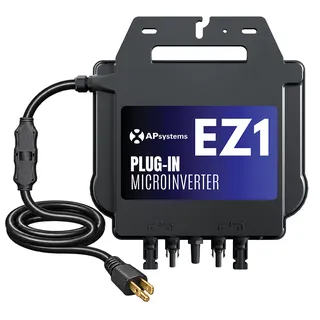
What to avoid is the long tail of no-name microinverters sold on marketplaces for $130–$330 with no verifiable certification. The inverter is the one component in this system that can hurt someone if it's built wrong. It is not the place to save $50.
Tier 1: the certified inverters, and the panels that fit them
Two plug-in microinverters carry UL 3700 certification through CSA Group today. Neither is really an Amazon product — the EZ1 turns up there through third-party sellers at best — which is part of why Amazon's shelf in this category looks the way it does. Both are sold as bare inverters, so panels are a separate purchase, and panel fit is a spec check, not a guess. Street prices checked November 2026:
| Inverter | Certification | Panels | Panel window | Street price |
|---|---|---|---|---|
| APsystems EZ1-LV | UL 3700 (CSA certificate 80310017; file 259077) + UL 1741 SB | 2, independent MPPT | 315–660W each; Vmp 27–45V; Voc under 60V | $269.99–$325 ($10 off at APsystems' store with code HOMEGENERATORHQ) |
| Hoymiles HiFlow Pro 450 | UL 3700 (CSA Certificate of Compliance 80310016) | 1 per unit; up to 4 units for 1,200W | 360–500W | ~$146–$160 at US sellers |
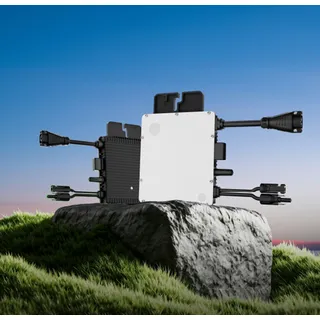
The panel class that fits: a 400–450W residential panel. The worked example is Renogy's Bifacial 450W, sold on Amazon in pairs: Vmp 34.7V (inside the EZ1's 27–45V tracking range), Voc 41.3V (comfortably under the 60V input limit, with cold-weather margin to spare), Isc 13.9A (under the 25A per-input limit) — and the panel itself is ETL-listed to UL 61730. Two of them on one EZ1 make a 900W system: roughly $269.99–$325 of inverter plus about $800–$900 for the pair of panels, before mounts and cable. The same panel also fits the Hoymiles HMS-800-2T-NA in the Tier 2 table below (360–600W modules, 65V maximum input) if you take the UL 1741 route instead. Smaller panels like the 200W in that table fall below the EZ1's 315W-per-input minimum — match the panel to the inverter's printed window, not the other way around.
Check price: Renogy 450W Bifacial Panel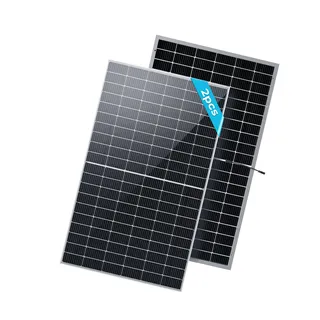
One boundary, stated plainly: the certification covers the inverter. A system you assemble from a certified inverter and your own panels is not itself a certified kit — no complete plug-in kit is, yet. State laws are written around certified devices, which is what makes the inverter's paperwork the part worth checking.
Tier 2: UL 1741-listed inverters — listed, not plug-in certified
Not every legitimate inverter carries UL 3700, and pretending otherwise would hide real options. So this page runs two tiers, labeled the way our water-filter work separates certified products from manufacturer-claimed ones. Tier 1 (above) is the recommendation: inverters certified to UL 3700, the plug-in standard, with a certifier's record anyone can look up. Tier 2 is the shelf below it: inverters listed to UL 1741 — the long-standing grid-interconnect standard — from named manufacturers, and sold on Amazon. (Amazon-only is this tier's rule: it is the shelf a reader can actually buy from one cart.) Every product in this tier carries the same label:
Listed inverter — not certified as a plug-in system.
What the label means, in plain words. A UL 1741 listing — Supplement SB is the current form — verifies the grid behavior: the inverter synchronizes with the grid, provides the grid-support functions IEEE 1547 requires, and shuts off within moments when the grid fails. That anti-islanding shutoff is the most important safety function in this category, and a Tier 2 inverter genuinely has it, tested by a recognized lab. What UL 1741 does not test is the plug-in part. It assumes a proper interconnection — a circuit installed for the purpose. It does not evaluate a cord feeding a shared household branch circuit, where the breaker can only see part of the current: the breaker can pass its rated 15 or 20 amps while the inverter adds more on the same wires, so the circuit can be overloaded without anything tripping. It does not test the plug itself — live blades when a cord is pulled under load — or how the device interacts with the GFCI protecting a shared circuit. UL 3700 was written to test exactly those things. That gap, not the inverter's quality, is what the label is about.
Who this tier is for: a buyer in a state whose plug-in law accepts a UL 1741 or lab listing — Connecticut names UL 1741, and Utah and most other law states ask for a recognized lab's certification without naming UL 3700 — who will put the system on a dedicated circuit, and who is comfortable that the plug-in-specific tests have not been run on it. Who should stay in Tier 1: anyone in Maine or Vermont, whose laws name UL 3700 or an equivalent (New Jersey's law names UL 3700 for devices over 400W from March 2027), and anyone whose only option is a shared circuit with heavy loads on it.
| Product | The listing | What it is | Price (source, checked November 18, 2026) |
|---|---|---|---|
| Hoymiles HMS-800-2T-NA | UL 1741 incl. Supplement SB — CSA Group certificate 80112487 | 800VA peak / 720VA continuous microinverter, 240V class, 2 panels | $269 at Self2Solar, a Hoymiles distributor (Hoymiles publishes no US direct price) |
| PluggedSolar 800W kit | UL 1741 — seller-stated (APsystems microinverter); no certifier record names the kit | Complete kit: four 200W panels, 800W microinverter, Wi-Fi monitor, 50 ft cord | $1,449 at PluggedSolar's own store, without mounting |
Hoymiles HMS-800-2T-NA — Listed inverter — not certified as a plug-in system. The strongest paperwork in this tier: CSA Group's Certificate of Compliance 80112487 (issued January 2023) lists the HMS-800-2T-NA by name to UL 1741, with grid support verified to Supplement SB and IEEE 1547-2018 — the same lab, and the same kind of public record, as the Tier 1 certificates, one standard older. Specs: two panels with independent MPPT; modules 360–600W; maximum input voltage 65V; 800VA peak and 720VA continuous output; 12-year standard warranty, extendable to 25. Two buying warnings. First, the suffix: the -NA model is the US-listed one — the same nameplate is sold in European and Australian variants that carry no US listing, and marketplace listings mix them. Second, this is a 240V-class unit: it belongs on a dedicated 240V circuit, which is exactly where a Tier 2 inverter belongs. It is not a kitchen-outlet device.
Check price: Hoymiles Hms 800 2T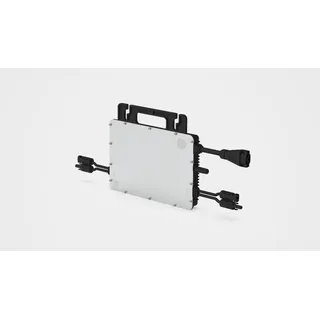
PluggedSolar 800W kit — Listed inverter — not certified as a plug-in system. The only complete plug-in kit with a durable Amazon listing, from a California company that has sold these kits since 2012. Its evidence grade is one step below the Hoymiles: PluggedSolar states that the kit's microinverter is UL 1741 compliant for anti-islanding and names APsystems as the inverter's manufacturer, but no certifier's record names this kit or its inverter configuration — so the claim is filed as seller-stated, and the kit sits in this tier. (PluggedSolar's site also claims UL 3700 for the kit's inverter; we could not tie that claim to a certifier record for what ships in the box, so it does not move the kit to Tier 1.) The kit: four 200W panels, an 800W microinverter on a 50 ft cord, and a Wi-Fi power monitor. Direct from PluggedSolar it is $1,449 without mounting, checked November 18, 2026; its Amazon price has run both above and below the direct price, so check both before paying either.
Check price: Pluggedsolar 800W Kit
One absence worth explaining: Mango Power's S PIPV kit is the best-known name in this class, and its microinverters do carry a UL 1741 listing (Intertek/ETL). It is not in this tier for one reason: Mango sells the kit only through its own store and solar retailers — it has no Amazon listing, and this tier is Amazon-sold products only. Mango has since announced Intertek certification to UL 3700 for the microinverters (press release September 2026; pv magazine calls Mango the third certified company after Hoymiles and APsystems), and its store now lists UL 3700 in the kit's certification line — but no Intertek certificate number has been published anywhere, so the claim is still filed as announced, not verified — and what Intertek issued on September 7, 2026 was component recognition for the microinverters only, not certification of the complete kit (per Mango's own material). The kit is $2,499 at Mango's own store.
What's actually buyable on Amazon
Honest inventory, checked November 2026: Amazon's plug-in solar shelf is thin. The name-brand kits (Zendure, Anker, Renogy's kit) have been listed as unavailable on Amazon US, and EcoFlow's STREAM line has never been listed there at all — EcoFlow sells it direct, currently for Utah plug-in use. What Amazon does reliably carry is the one long-running kit brand and the components for building your own. Approximate street prices as of November 2026; Amazon's price at checkout is the real one.
| Item | What it is | Approx. price |
|---|---|---|
| PluggedSolar 800W kit | Four 200W panels, UL 1741 microinverter, Wi-Fi monitor, 50 ft cord — the only complete kit with a real Amazon US listing (Tier 2, above) | ~$1,395 on Amazon |
| Hoymiles HMS-800-2T | 800W microinverter, UL 1741-listed (Tier 2, above); the usual pick for a DIY build | ~$150–$250 |
| Renogy 200W panel | Standard rigid panel; panels are close to a commodity — match voltage and current to your inverter's inputs | ~$200 |
One price note in the site's usual spirit: PluggedSolar's own website has run the 800W kit for considerably less than its Amazon price. Amazon buys you Prime shipping and easy returns; check both before paying either. Buy links for the kit and the Hoymiles inverter are in Tier 2 above; the panel link is here:
Check price: Renogy 200W Panel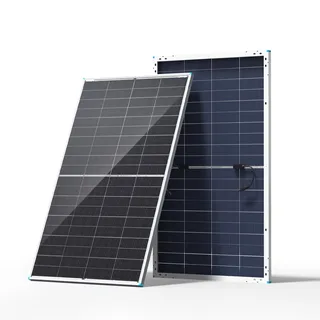
Not on Amazon, for completeness: Bright Saver, a California nonprofit, sells a small balcony panel direct from about $399; CraftStrom sells an 800W kit direct at about $2,031. Both are legitimate routes in legal states — they just aren't Amazon purchases.
What it saves, honestly
An 800W plug-in system in decent sun generates roughly 900–1,200 kWh a year. (PluggedSolar estimates up to 1,600 kWh a year from its 800W kit; treat maker figures as best-case ceilings, as with everything on this site.) Run your own numbers — your rate, your region, the real bundle prices — in the plug-in solar calculator. What that's worth depends entirely on your rate:
- At ~$0.14/kWh (Utah, Colorado): about $125–$170 a year
- At ~$0.24/kWh (much of New England): about $215–$290 a year
- At ~$0.31/kWh (California): about $280–$370 a year
Against those savings: a DIY build from components runs about $600–$800 (payback roughly 3–5 years), and the $1,395 complete kit takes roughly 5–10. Panels last decades; the microinverter is the wear item, so its warranty length matters more than its price. The federal residential solar tax credit expired at the end of 2025, so don't let any listing price one in.
If you actually need outage power
Plug-in solar and backup power solve opposite problems. A plug-in kit earns its keep on the 360 days a year the grid is up and does nothing on the few days it isn't. A battery power station does the reverse: it sits idle most of the year and is priceless during an outage — and paired with panels, it is the outage-proof version of solar. Our guide to solar panels for power stations covers that pairing, and the size calculator will tell you how much battery or generator your loads actually need. Buy for the problem you have.
FAQ
Does plug-in solar work during a power outage?
No. Plug-in inverters are required to shut down within moments of a grid failure (anti-islanding), to protect utility workers. Battery hybrids are the exception, and those are power stations that also plug in — they work in an outage only from their stored battery energy, exactly like any other power station.
Is plug-in solar legal in my state?
As of November 2026, dedicated laws are in effect in Utah, Maine, Maryland, Vermont, Connecticut, and Colorado, and signed laws take effect in California, Virginia, and New Hampshire on January 1, 2027, and in New Jersey on March 1, 2027. In all other states there is no plug-in framework yet, and feeding an outlet without a utility interconnection agreement is not sanctioned. Check your state legislature's site for the current status — this is changing state by state, session by session.
Do I need an electrician or a permit?
In states with plug-in laws, no — systems under the cap (1,200W in most states) need no permit, no electrician, and no utility pre-approval, though some states ask you to notify the utility. Do plug into a GFCI-protected outlet, and use a dedicated circuit if you can; a circuit shared with heavy loads is the most common real-world problem with these systems.
Is a UL 1741-listed inverter enough, or do I need UL 3700?
It depends on your state and your circuit. Maine and Vermont name UL 3700 (or an equivalent) in their plug-in laws, and New Jersey's law names it for devices over 400W from March 2027. Connecticut names UL 1741, and most other states with plug-in laws ask for a recognized lab's listing without naming UL 3700. Either way, know what the listing does and doesn't cover: UL 1741 (with Supplement SB) verifies anti-islanding and grid behavior, but it was written for inverters on proper interconnections — it does not test the plug-in hazards UL 3700 covers, like a back-fed shared branch circuit or live plug blades. Tier 2 above lists the UL 1741 products we consider acceptable — on a dedicated circuit, in a state whose law accepts the listing.
Can I build a plug-in system from separate panels and an inverter?
Yes — that is what most of the Amazon-available route looks like today: standard rigid panels plus a listed microinverter. Match the panels' voltage and current to the inverter's input limits, keep the total under your state's cap, and do not compromise on the inverter's certification. The inverter is the safety device; the panels are a commodity.
Will plug-in solar run my air conditioner?
It offsets your home's total draw while the sun shines, which includes whatever the AC is using — but a system capped at 1,200W cannot carry a central air conditioner's load by itself, and it produces nothing at night. Think of it as a discount on your bill, not a power source for specific appliances.
How long until a plug-in kit pays for itself?
Roughly 3–5 years for a component build (~$600–$800) and 5–10 years for a $1,395 complete kit, depending on your state's electricity rate and your sun. High-rate states (California, New England) pay back fastest — which is not a coincidence; those are also the states moving first on legalization.
Related guides
- Best Portable Generators in 2026
- Best Portable Power Stations in 2026
- Best Solar Panels for Power Stations in 2026
- Anker SOLIX F3800 Plus vs EcoFlow DELTA Pro 3