How Long Will a Power Station Run a CPAP? Hours and Nights by Model
Quick answer
It depends almost entirely on the humidifier. On ResMed's own published figures, a CPAP draws about 11 W with the humidifier off, 28 W with it on, and 56 W with the humidifier and a heated tube - so the same station lasts five times longer with the heat off. The short version: a 300 Wh station covers one night with the humidifier off but not with it on; a 768 Wh station is the smallest size that covers a full heated night with margin; and a 1,000 Wh-class station covers about two full heated nights. The full table for every current model is below, and our Power Station Builder runs the same math with your fridge and lights added. In a hurry? The CPAP runtime calculator takes your exact setup and station and gives the verdict directly.
What a CPAP actually draws (ResMed's numbers, not guesses)
Most runtime charts online pick a round number - 40 W, 60 W, 90 W - and never say where it came from. ResMed publishes measured figures, and they are lower than the round numbers, because a CPAP blower is a small load; it is the water heater that eats the battery.
| CPAP setup | Draw | Where the figure comes from |
|---|---|---|
| Humidifier off | About 11 W | ResMed Battery Guide (doc. 198103/7), AirSense 10 at 10 cmH2O through ResMed's DC converter: 0.93 A x 12 V |
| Humidifier on (mid setting) | About 28 W | Same guide, humidifier setting 4: 2.30 A x 12 V. At the maximum setting (8) it is about 44 W |
| Humidifier + heated tube | About 56 W | ResMed AirSense 11 User Guide technical specifications: 56.1 W typical, 73.2 W peak |
Two honest caveats. First, your pressure matters: with the humidifier off, ResMed's table runs from 8.4 W at 6 cmH2O to 19.9 W at 20 cmH2O. Second, the 11 W and 28 W figures were measured through ResMed's DC converter; the math below applies the same 15% conversion allowance our builder uses everywhere, so treat the hours as planning figures with a margin, not promises. Figures checked 2026-11-14.
The math
Hours = capacity (Wh) x 0.85 / draw (W). Nights are hours divided by 8. Nothing else is hidden in it - you can check any row with a calculator, and the builder uses exactly this method, so the table and the tool cannot disagree.
Every current model, three setups
| Power station | Capacity | Humidifier off (11 W) | Humidifier on (28 W) | Humidifier + heated tube (56 W) | Maker price |
|---|---|---|---|---|---|
| EcoFlow RIVER 3 | 245 Wh | 19 hrs | 7 hrs | 4 hrs | — |
| EcoFlow RIVER 3 Plus | 286 Wh | 22 hrs | 9 hrs | 4 hrs | $299 |
| Anker SOLIX C300 | 288 Wh | 22 hrs | 9 hrs | 4 hrs | $430 |
| DJI Power 500 | 512 Wh | 40 hrs | 16 hrs | 8 hrs | $419 |
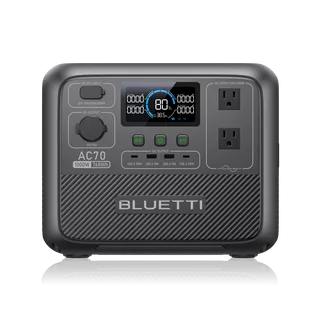
| BLUETTI AC70 | 768 Wh | 59 hrs | 23 hrs | 12 hrs | $359 |
| Anker SOLIX C1000 Gen 2 | 1,024 Wh | 79 hrs | 31 hrs | 16 hrs | $530 |
| DJI Power 1000 V2 | 1,024 Wh | 79 hrs | 31 hrs | 16 hrs | $699 |
| EcoFlow DELTA 2 | 1,024 Wh | 79 hrs | 31 hrs | 16 hrs | — |
| EcoFlow DELTA 3 | 1,024 Wh | 79 hrs | 31 hrs | 16 hrs | $579 |
| EcoFlow DELTA 3 Classic | 1,024 Wh | 79 hrs | 31 hrs | 16 hrs | $479 |
| EcoFlow DELTA 3 Plus | 1,024 Wh | 79 hrs | 31 hrs | 16 hrs | $719 |
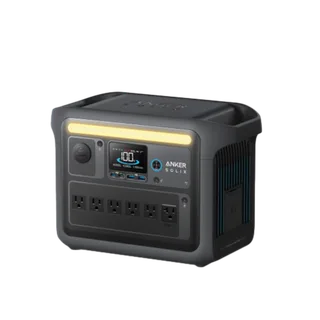
| Anker SOLIX C1000 | 1,056 Wh | 82 hrs | 32 hrs | 16 hrs | $480 |
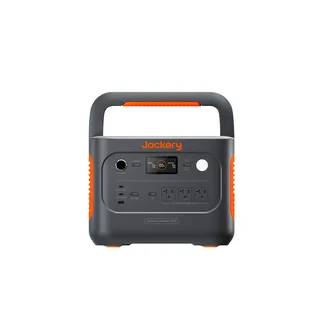
| Jackery Explorer 1000 v2 | 1,070 Wh | 83 hrs | 32 hrs | 16 hrs | $559 |
| BLUETTI AC180 | 1,152 Wh | 89 hrs | 35 hrs | 17 hrs | $499 |
| Jackery Explorer 1000 Plus | 1,265 Wh | 98 hrs | 38 hrs | 19 hrs | $619 |
| EcoFlow DELTA 3 1500 | 1,536 Wh | 119 hrs | 47 hrs | 23 hrs | — |
| Anker SOLIX S2000 | 2,010 Wh | 155 hrs | 61 hrs | 31 hrs | $1,000 |
| Jackery Explorer 2000 v2 | 2,042 Wh | 158 hrs | 62 hrs | 31 hrs | $999 |
| BLUETTI AC200MAX | 2,048 Wh | 158 hrs | 62 hrs | 31 hrs | $1,199 |
| DJI Power 2000 | 2,048 Wh | 158 hrs | 62 hrs | 31 hrs | $1,299 |
| EcoFlow DELTA 2 Max | 2,048 Wh | 158 hrs | 62 hrs | 31 hrs | $1,029 |
| EcoFlow DELTA 3 Max | 2,048 Wh | 158 hrs | 62 hrs | 31 hrs | $879 |
| EcoFlow DELTA 3 Max Plus | 2,048 Wh | 158 hrs | 62 hrs | 31 hrs | $1,149 |
| BLUETTI Elite 200 V2 | 2,074 Wh | 160 hrs | 63 hrs | 31 hrs | $899 |
| Anker SOLIX F2600 | 2,560 Wh | 198 hrs | 78 hrs | 39 hrs | $2,000 |
| BLUETTI Apex 300 | 2,765 Wh | 214 hrs | 84 hrs | 42 hrs | $1,499 |
| Jackery HomePower 3000 | 3,072 Wh | 237 hrs | 93 hrs | 47 hrs | $1,499 |
| Jackery HomePower 3600 Plus | 3,584 Wh | 277 hrs | 109 hrs | 54 hrs | $1,899 |
| EcoFlow DELTA Pro | 3,600 Wh | 278 hrs | 109 hrs | 55 hrs | $1,799 |
| Anker SOLIX F3800 Plus | 3,840 Wh | 297 hrs | 117 hrs | 58 hrs | $2,400 |
| EcoFlow DELTA Pro 3 | 4,096 Wh | 317 hrs | 124 hrs | 62 hrs | $2,799 |
| Jackery Explorer 5000 Plus | 5,040 Wh | 389 hrs | 153 hrs | 76 hrs | $3,499 |
| EcoFlow DELTA Pro Ultra | 6,144 Wh | 475 hrs | 187 hrs | 93 hrs | $4,199 |
Prices are manufacturers' published prices, checked 2026-11-14 - not Amazon prices. BLUETTI's AC300 and AC500 are inverter-only units with no built-in battery, so they are not in the table; paired with a B300K battery (3,072 Wh) they land near the top of it.
The worked example everyone asks about
Will a ResMed AirSense 11 run all night on a Jackery Explorer 1000 v2? Yes - with room to spare. The Explorer 1000 v2 stores 1,070 Wh: about 83 hours (10 nights) with the humidifier off, 32 hours (4 nights) with it on, and 16 hours (2 nights) with the humidifier and heated tube both running. The interesting failures are at the small end: a 512 Wh station works out to 7.8 hours at full heat - just short of a full night - and a 245-288 Wh station cannot finish a heated night at all, however the marketing rounds it.
Adding a battery adds nights
Because CPAP draw is small, expansion batteries stretch it a long way. An EcoFlow DELTA 3 Plus (1,024 Wh) runs a heated-tube setup for about 15 hours; add its matching extra battery (another 1,024 Wh) and the same setup runs about 31 hours - nearly 4 nights - without buying a bigger station. The builder checks which batteries actually pair with which station, including the cable each pairing needs, before you price a combination.
What owners report in the real world
The table above is formula math from ResMed's published draws. We also collected owner-reported CPAP runtimes — 46 reports from public forum threads, each with a source link. They mostly back the formula: with the humidifier on, measured results land close to the 28-44 W predictions, and dry runs through a DC adapter often beat the 11 W figure. The one systematic gap is the plug: owners running the same machine both ways measured roughly 30% more energy through the station's AC outlet than through a maker DC converter, and one owner whose humidifier was fitted but set to 0 still drew about 32 W on AC. If you plan to run on AC, read the dry-mode hours above as optimistic.
The verdicts
- Smallest station that covers a full heated night with margin: the BLUETTI AC70 (768 Wh, about 11.7 hours at full heat, around $359). Anything smaller is a dry-mode or part-night tool for CPAP.
- Best two-night heated pick: the Anker SOLIX C1000 (1,056 Wh, about 16 hours at full heat, around $480) - two full nights with the humidifier and tube on, and a normal household station the rest of the year.
- The named-model answer: the Jackery Explorer 1000 v2 (1,070 Wh, around $559) runs an AirSense 11 for 2 heated nights or 10 dry ones.
Its closest rival is the EcoFlow DELTA 3 - same 1 kWh class, more output, expandable, and the same roughly 10 dry or 2 heated CPAP nights. We compared them head to head: EcoFlow DELTA 3 vs Jackery Explorer 1000 v2.
- Multi-night outage or camping: step to a 2,000 Wh-class station (about 31 hours at full heat, roughly 4 nights) or add an expansion battery to a 1,000 Wh station you already own.
One setup tip that is worth more than capacity: turn the humidifier and heated tube off and the same station lasts about five times longer. In a one-night emergency that is the difference between a 300 Wh station failing at 3 a.m. and finishing the night easily. A manufacturer DC converter for your machine also helps a little, because it skips the station's inverter losses.
This page is power math, not medical advice. If running your CPAP without its humidifier would be a problem for you, size the station for the heated figures and talk to your sleep clinic about outage planning.
FAQ
How many watt-hours do I need for one night of CPAP?
About 90 Wh of usable capacity with the humidifier off (11 W x 8 hours), about 225 Wh with it on (28 W), and about 450 Wh with the humidifier and heated tube (56 W). Divide by 0.85 to get the nameplate size to buy: roughly 105 Wh, 265 Wh, and 530 Wh. In practice, buy a size up from the heated figure - a station that ends the night at 5% has no margin for a bad night.
Does my pressure setting change the runtime?
Yes, mostly in dry mode. ResMed's own table for the AirSense 10 runs from 8.4 W at 6 cmH2O to 19.9 W at 20 cmH2O with the humidifier off, so a high-pressure user can see dry-mode runtime drop by more than half versus the 11 W planning figure. With the humidifier on, the heater dominates and pressure matters less.
Will the station keep my CPAP running if the power cuts out while I sleep?
If the station is plugged into the wall with the CPAP plugged into the station, most current models switch to battery fast enough that therapy continues - but switchover speed varies by model and is a maker claim, not something we can verify from a spec sheet. If outage ride-through is the whole point, check the model's EPS/UPS switchover time on the maker's page before buying.
Can I run two CPAPs on one station?
Yes - add the draws together. Two machines with humidifiers on draw about 56 W combined, the same as one machine at full heat, so the heated-tube column above doubles as your two-machine dry-ish estimate; two machines at full heat draw about 112 W, which halves it again.
Related guides
- Anker SOLIX F3800 Plus vs EcoFlow DELTA Pro 3
- EcoFlow DELTA 2 Max vs BLUETTI Elite 200 V2
- EcoFlow DELTA 3 Plus vs Anker SOLIX C1000 Gen 2
- EcoFlow DELTA 3 vs EcoFlow DELTA 3 Plus