EcoFlow DELTA 3 Plus vs Anker SOLIX C1000 Gen 2
Quick answer
The EcoFlow DELTA 3 Plus wins this one for most home-backup buyers. It is in stock at EcoFlow's store today at $719, it expands to 5 kWh when your plans grow, and it takes 1,000 W of solar against the Anker's 600 W. The Anker SOLIX C1000 Gen 2 is the cheaper box - $469.99, $250 less - with more output (2,000 W against 1,800 W), a 49-minute wall recharge against 56, and 2.7 lb less weight. But it is a pre-order shipping in 3-7 weeks, and it can never expand: Anker's own FAQ says the Gen 2 "does not include an expansion feature." Same battery, same runtimes - the $250 gap buys a future, not more hours per charge.
Check price: Ecoflow Delta 3 Plus Check price: Anker Solix C1000 Gen 2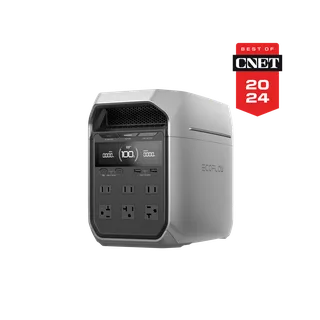
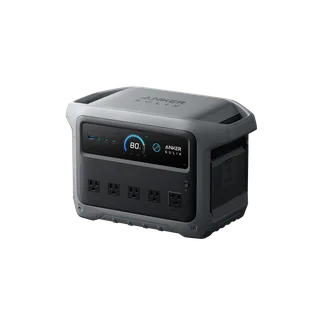
The two units, in order: EcoFlow DELTA 3 Plus, Anker SOLIX C1000 Gen 2.
First, the naming trap
Anker sells two different units called C1000. The original C1000 (A1761) is 1,056 Wh, 1,800 W output, takes about 58 minutes to recharge, switches UPS in 20 ms, and is expandable. The C1000 Gen 2 on this page is 1,024 Wh, 2,000 W output, recharges in 49 minutes, switches UPS in 10 ms, and is not expandable. Every figure on this page is the Gen 2's, verified against Anker's own Gen 2 product page and its comparison table on 2026-11-21. If a review or a listing quotes 1,056 Wh or an expansion battery for a "C1000," it is describing the original, not this unit. The same trap nearly caught this cadence once before - our DELTA 3 vs Explorer 1000 v2 page records Jackery's own pages disagreeing on that unit's capacity - so we state the split up front rather than burying it.
Head to head
| Spec | EcoFlow DELTA 3 Plus | Anker SOLIX C1000 Gen 2 |
|---|---|---|
| Capacity | 1,024 Wh | 1,024 Wh |
| AC output (continuous) | 1,800 W | 2,000 W |
| Peak / surge (maker-rated) | 3,600 W | 3,000 W |
| Boost mode for resistive loads | 2,200 W (X-Boost, specs table; page prose says over 2,600 W - see the output round) | None published |
| AC outlets | 6 outlets | 10 ports total (AC + DC + USB) |
| Battery | LiFePO4 | LiFePO4 |
| Rated cycles | 4,000 to 80+% capacity | 4,000 to 80%+ capacity |
| Expandable | Yes - to 5,120 Wh with one extra battery | No - Anker FAQ: "does not include an expansion feature" |
| Max solar input | 1,000 W (two ports, 11-60 V each, 500 W each) | 600 W (11-60 V) |
| Wall recharge to full | 56 min at 1,500 W | 49 min UltraFast at 1,600 W (app-enabled; see the charging round) |
| UPS switching | <10 ms | 10 ms |
| Noise | 30 dB under 600 W | None published |
| Weight | 27.6 lb | 24.9 lb |
| Dimensions | 16 x 8.0 x 11 in | 15.12 x 8.19 x 9.61 in |
| Warranty | 5 years | Not stated on Anker's product page |
| Price (see note) | Around $719 | Around $469.99 |
| Cost per watt-hour (our math) | $0.70/Wh | $0.46/Wh |
| Cost per watt of output (our math) | $0.40/W | $0.23/W |
Prices are the manufacturers' published prices from our dataset, re-verified on EcoFlow's and Anker's own product pages on 2026-11-21 - not Amazon prices. The DELTA 3 Plus is $719 and in stock at EcoFlow's US store. The C1000 Gen 2 is $469.99 as a pre-order; Anker's shipping update says all orders ship within 3-7 weeks. We compare published specs and prices only; we don't hands-on test.
What the capacity buys you
Same runtime math as our Power Station Builder: usable AC energy is capacity x 0.85 after inverter losses, divided by the load's average draw. Both units hold exactly 1,024 Wh, so the runtimes are identical - the difference between these two is everything around the battery, not the battery itself.
| Load | EcoFlow DELTA 3 Plus | Anker SOLIX C1000 Gen 2 |
|---|---|---|
| Full-size fridge (80 W average) | About 10.9 hrs | About 10.9 hrs |
| CPAP, no humidifier (11 W) | About 79 hrs - roughly 10 nights | About 79 hrs - roughly 10 nights |
| CPAP with humidifier and heated tube (56 W) | About 15.5 hrs - about 2 nights | About 15.5 hrs - about 2 nights |
| Space heater (1,500 W) | About 35 min | About 35 min |
| Window AC, 10,000 BTU (820 W) | About 1.1 hrs | About 1.1 hrs |
| 55-inch TV (97 W average) | About 9.0 hrs | About 9.0 hrs |
Neither unit is a multi-day fridge battery on its own - both are a night of CPAP plus a morning of fridge, or a day of lights, router, and phones. The gap opens only when one of them grows: expanded to 5,120 Wh, the DELTA 3 Plus runs a fridge about 54 hours and a dry CPAP about 49 nights. The Anker has no expanded state. See the expansion round.
Round by round
Capacity: a tie, and the tie is the story. 1,024 Wh each, identical runtimes on every load in the table. Any page that tells you one of these "runs a fridge longer" is inventing a difference. What differs is output, charging, solar, expansion, and availability - the rounds below.
Output: Anker, narrowly. 2,000 W continuous against 1,800 W, and the Anker's 200 W edge is plain inverter output, not a boost mode. The EcoFlow's counter is surge (3,600 W against 3,000 W) and X-Boost: its specs table rates X-Boost at 2,200 W for resistive loads (heaters, kettles), while its page prose says "over 2,600 W" - the two disagree, we record the specs table, and the conflict is flagged in our dataset. X-Boost doesn't apply to motors and compressors, so for the loads that trip a 1 kWh unit - a fridge compressor starting, a microwave - judge the EcoFlow on its 1,800 W and 3,600 W surge, not on either X-Boost number. The Anker's extra 200 W of continuous output is the more useful edge for a space heater or a hair dryer running alongside a fridge.
Charging: Anker on speed, EcoFlow on no-conditions speed. 49 minutes against 56, and Anker calls the Gen 2 the fastest-recharging 1 kWh station as of April 2025. But the 49 minutes has conditions: UltraFast charging runs at 1,600 W only when enabled in the Anker app, and only when the battery is above 20 C (68 F) - below that, charging "will significantly reduce" in speed, per Anker's own FAQ. The EcoFlow's 56 minutes is its standard 1,500 W X-Stream charge with no app toggle and no temperature gate stated. In a warm house both are under an hour; in a cold garage in January, the EcoFlow's number is the more honest one. The Anker also charges from the grid and solar at the same time (solar prioritized); the EcoFlow's multi-charging (AC + solar) holds its 56-minute figure too.
Solar: EcoFlow, clearly. 1,000 W against 600 W, and the port split is the friendlier one: two 500 W ports at 11-60 V each, so two panels feed in parallel, against the Anker's single 600 W input. EcoFlow claims a full solar recharge in 70 minutes at 1,000 W; Anker claims 1.8 hours at 600 W. The cold-morning check matters on both: each port caps at 60 V, so a 450W-class rigid panel (Voc 41.25 V per its datasheet, the figure our plug-in solar guide already verified) fits one per port, but two in series reach 82.5 V nominal - about 91 V on a freezing morning - and exceed the ceiling on either unit. Single-panel strings only for panels that size; the DELTA 3 Plus takes two of them, the Anker one. Our builder checks strings against each station's published window with a cold-weather allowance, because a string that fits in July can exceed the limit on a freezing morning.
Expansion: EcoFlow, and this is the round that decides the purchase. The DELTA 3 Plus takes one extra battery (DELTA 3, DELTA 2, DELTA 2 Max, or DELTA Pro 3 packs, via an Alternator Charger XT150 cable) to 5,120 Wh - five times the base capacity. The C1000 Gen 2 takes none: Anker's FAQ is explicit, and it points expandable-capacity buyers back to the original C1000. The honest caveat on the EcoFlow side: there is no standalone US price for the DELTA 3 Series Extra Battery in EcoFlow's store - it is sold in bundles, and the DELTA 3 Plus + extra battery bundle ($1,119) was out of stock at our 2026-11-21 check. So expansion is a real capability with a currently unbuyable price tag, not a priced option. Even so, a capability you can buy later beats one that doesn't exist: the Anker you buy today is the Anker you own forever.
Battery lifespan: a tie. 4,000 cycles to 80%+ capacity on both, both LiFePO4 - multiplied out, both land near 4.1 MWh of rated lifetime energy. The EcoFlow carries a 5-year warranty; Anker's Gen 2 page states no warranty figure in the specs we checked. And the usual caveat: a station that cycles a few times a year in outages will die of calendar age long before it sees either number.
CPAP: EcoFlow on evidence - including evidence against it. On our math the two are identical, but the owner record is not. We have one owner CPAP report for the DELTA 3 Plus in our owner-data set: an owner running "just the machine" for about 8 hours used nearly half the battery - an implied draw around 58 W against our 11 W dry preset - consistent with comments in that thread that the DELTA 3's inverter idles expensively at CPAP loads. We have no owner CPAP reports for the C1000 Gen 2 at all. So the EcoFlow is the only one of the two with a real-world CPAP datapoint, and the datapoint says: run a CPAP on the DELTA 3 Plus through a DC converter, or budget far more than the preset, because AC idle draw dominates at 11 W loads. Anker's own page names CPAP machines in its 10 ms UPS copy; neither unit has the owner evidence to back a CPAP recommendation outright. Both machines' full per-setting tables are in our CPAP runtime guide and the CPAP calculator.
UPS and noise: a draw with different strengths. Under 10 ms against 10 ms - both are fast enough for a CPAP or a laptop, and the difference is rounding. On noise the EcoFlow publishes 30 dB under 600 W where Anker publishes no noise figure at all. Neither maker publishes a full-load figure the other can be judged against, so don't decide on noise alone.
Portability: Anker. 24.9 lb against 27.6 lb, and a smaller box (15.12 x 8.19 x 9.61 in against 16 x 8.0 x 11 in). Both are one-hand carries at this size, but 2.7 lb and the smaller footprint are real when the unit lives in a closet or a car trunk. The EcoFlow's counter is its IP65-rated battery pack - splash and dust resistance the Anker doesn't claim.
Value: Anker on the sticker, EcoFlow on the system. The Anker is $250 cheaper on the list and far cheaper per watt-hour ($0.46 against $0.70) and per watt of output ($0.23 against $0.40). Which measure matters depends on the job: if the job is one 1 kWh box for the lowest price, the Anker is the bargain by a wide margin. If the job grows - more solar, a second battery, a longer outage - the EcoFlow's expansion and solar are options the Anker can never offer at any price. Buy the box on the Anker's price; buy the system on the EcoFlow's.
Availability: EcoFlow, and it isn't close. On 2026-11-21 the DELTA 3 Plus was in stock at EcoFlow's US store at $719. The C1000 Gen 2 was a pre-order at $469.99, with Anker's shipping update saying all orders ship within 3-7 weeks. A backup unit you can't buy doesn't back anything up - and a pre-order with a 3-7 week window is a longer wait than the Jackery pre-order on our Explorer 5000 Plus vs F3800 Plus page.
Score: Anker takes output, charging speed, portability, and value on the sticker. EcoFlow takes solar, expansion, and availability. Capacity, lifespan, and UPS/noise are ties.
The verdict
Buy the
Check price: Ecoflow Delta 3 Plusif this is a home-backup unit - the fridge overnight, the CPAP, the router and phones through an outage. It is in stock today, it takes twice the solar, and it grows to 5 kWh when your plans do. The $250 premium buys a future the Anker doesn't have. In our full power station roundup the 1 kWh class is where buyers most often underbuy solar and expansion; head to head, the EcoFlow is the safer underbuy-proof pick.
Pick the Anker instead if...
- The lowest price for a 1 kWh box is the job. $469.99 against $719 is a $250 gap for identical runtimes - the biggest price difference on this page, and it runs the other way from the capability gap.
- Wall-charging speed matters most. 49 minutes against 56, in a warm house with the app toggle on - the fastest 1 kWh recharge Anker will sell you.
- You need the extra 200 W. A space heater plus a fridge, or a hair dryer that would trip the EcoFlow's 1,800 W ceiling - the Anker's 2,000 W is plain output, not a boost mode.
- You can wait 3-7 weeks and will never expand. If the unit is a car-camping box or a single-room backup that stays 1 kWh forever, the Anker's missing expansion is a missing feature you'll never miss - but be honest with yourself about "forever" before you buy it.
FAQ
Do they really run a fridge for the same time?
Yes - identical capacity means identical runtimes on our math: about 10.9 hours on an 80 W average fridge for both. The difference is what happens next: the EcoFlow can grow to 5,120 Wh and run that fridge about 54 hours; the Anker stays at 1,024 Wh. Our DELTA 3 vs DELTA 3 Plus page works the same math for the EcoFlow against its own smaller sibling.
Can the C1000 Gen 2 take an extra battery?
No. Anker's own FAQ says the Gen 2 "does not include an expansion feature," and points buyers who need expandable capacity to the original C1000. The original C1000 (1,056 Wh, 1,800 W) is a different unit - don't buy it expecting Gen 2 charging speed, and don't buy the Gen 2 expecting the original's expansion.
Which one charges faster from the wall?
The Anker, on paper: 49 minutes with UltraFast enabled in the app at 1,600 W, against the EcoFlow's 56 minutes at 1,500 W. The condition is battery temperature above 20 C (68 F); below that, Anker says charging speed "will significantly reduce." The EcoFlow's 56 minutes carries no such condition.
Is the C1000 Gen 2 actually available?
As a pre-order, not in stock: on 2026-11-21 Anker's page showed $469.99 as a pre-order with a shipping update saying all orders ship within 3-7 weeks. The DELTA 3 Plus was in stock at $719 on the same day.
How much does the DELTA 3 Plus's extra battery cost?
There is no standalone US price: EcoFlow's store sells the DELTA 3 Series Extra Battery in bundles, not on its own. The DELTA 3 Plus + extra battery bundle was $1,119 and out of stock at our 2026-11-21 check - so expansion is a verified capability with an unbuyable price tag today, not a priced option. We don't quote the $389 figure from EcoFlow's TikTok shop as a price; it is noted in our dataset only.
Related guides
- Anker SOLIX F3800 Plus vs EcoFlow DELTA Pro 3
- EcoFlow DELTA 2 Max vs BLUETTI Elite 200 V2
- EcoFlow DELTA 3 vs EcoFlow DELTA 3 Plus
- EcoFlow DELTA 3 vs Jackery Explorer 1000 v2