Jackery Explorer 5000 Plus vs Anker SOLIX F3800 Plus
Quick answer
The Anker SOLIX F3800 Plus wins this one for most home-backup buyers. It costs $500 less ($2,999.99 against $3,499), runs its 120V and 240V outlets at the same time, expands to nearly 27 kWh for about $3,000 less than the Jackery's full 30 kWh build, and - the point that decides it - it is in stock at Anker's store today while the Jackery is a pre-order shipping December 5. The Jackery answers with more capacity per charge (5,040 Wh against 3,840 Wh), more output (7,200 W against 6,000 W), a 14,400 W surge rating where Anker publishes none, more solar (4,000 W against 3,200 W), and a true 0 ms UPS against 20 ms. If your loads include a big 240V motor start, read the output round before you pick - the surge gap is the one place the cheaper unit can't answer.
Check price: Jackery Explorer 5000 Plus Check price: Anker Solix F3800 Plus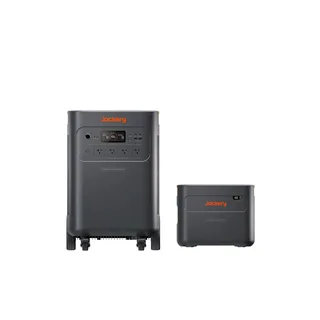
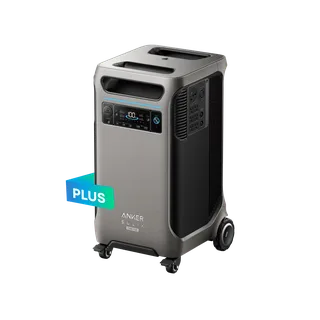
The two units, in order: Jackery Explorer 5000 Plus, Anker SOLIX F3800 Plus.
Head to head
| Spec | Jackery Explorer 5000 Plus | Anker SOLIX F3800 Plus |
|---|---|---|
| Capacity | 5,040 Wh | 3,840 Wh (see the capacity round) |
| AC output (continuous) | 7,200 W | 6,000W max (240V outlet; 2,400W max on 120V outlets) |
| Peak / surge (maker-rated) | 14,400 W | None published |
| 120V outlets | Four, 3,600 W total | Six 120V outlets + TT-30R (3,000 W max), 2,400 W max per outlet group |
| 240V output | Yes - 7,200 W total via the 240V port | Yes - L14-30R, 6,000 W max, simultaneous with 120V |
| Battery | LiFePO4 | LiFePO4 |
| Rated cycles | 4,000 (Jackery's 11-year figure is calculated from this) | 3,000+ (retention threshold not stated) |
| Expandable | Yes - to 30 kWh with 5 extra batteries (60 kWh with two units) | Yes - to 26,880 Wh with 6 extra batteries (see the expansion round) |
| Max solar input | 4,000 W | 3,200 W (two ports, 11-165 V each) |
| Solar ports | High-PV 135-450 V / 15 A, plus two low-PV DC 8mm ports (16-60 V, 1,200 W combined) | Two identical 11-165 V MPPT ports, 1,600 W each |
| Wall recharge to full | Not published as a standard figure - 1.7 hrs via Smart Transfer Switch charging (see the charging round) | Under 3 hrs (1,800 W input) |
| UPS | 0 ms (true online UPS) | 20 ms |
| Noise | 30 dB in Quiet Mode, 51.7 dB at full load | None published |
| Weight | 134.5 lb (one box) | 136.7 lb (one box) |
| Price (see note) | Around $3,499 | Around $2,999.99 |
| Cost per watt-hour (our math) | $0.69/Wh | $0.78/Wh |
| Cost per watt of output (our math) | $0.49/W | $0.50/W |
Prices are the manufacturers' published prices from our dataset, re-verified on Jackery's and Anker's own product pages on 2026-11-21 - not Amazon prices. The Explorer 5000 Plus is a pre-order at $3,499, shipping by December 5. The F3800 Plus is $2,999.99 and in stock at Anker's store. We compare published specs and prices only; we don't hands-on test.
What the capacity buys you
Same runtime math as our Power Station Builder: usable AC energy is capacity x 0.85 after inverter losses, divided by the load's average draw.
| Load | Jackery Explorer 5000 Plus | Anker SOLIX F3800 Plus |
|---|---|---|
| Full-size fridge (80 W average) | About 53.6 hrs - over 2 days | About 40.8 hrs |
| CPAP, no humidifier (11 W) | About 390 hrs - roughly 48 nights | About 297 hrs - roughly 37 nights |
| CPAP with humidifier and heated tube (56 W) | About 76.5 hrs - 9 nights | About 58 hrs - 7 nights |
| Space heater (1,500 W) | About 2.9 hrs | About 2.2 hrs |
| Well pump, 1/2 hp (670 W average) | About 6.4 hrs | About 4.9 hrs |
| Window AC, 10,000 BTU (820 W) | About 5.2 hrs | About 4.0 hrs |
The Jackery's extra 1,200 Wh buys about 13 more hours of fridge, or about 11 more CPAP nights, per charge - a real gap, but hours, not days. Both units run a 240V well pump (with the surge caveat in the output round) and a 3-ton central AC (Jackery's own FAQ puts a 2,200-3,050 W central AC at about 2 hours of cooling on the 5000 Plus). Neither is a multi-day whole-house battery on its own; the expansion round is where the gap opens or closes.
Round by round
Capacity: Jackery. 5,040 Wh against 3,840 Wh - 31% more per charge, and the runtime table above is the difference in hours. One Anker wrinkle worth stating, carried from our F3800 Plus vs DELTA Pro 3 page: Anker's own pages disagree about the F3800 Plus's capacity - the Tech Specs say 3,840 Wh and 136.7 lb, while its FAQ answer on basic specifications says 3,480 Wh and 135.6 lb - and we record the Tech Specs figures. Either way the Jackery holds a clear edge here; it just isn't the round that decides this comparison.
Output: Jackery on the numbers, Anker on how the outlets work. The Jackery is rated 7,200 W continuous with a 14,400 W surge; the Anker is 6,000W max through its 240V outlet (2,400W max on its 120V outlets) and publishes no surge figure at all. Surge is what starts motors: a 1/2 hp well pump's locked-rotor draw is 5,336 VA on the 3-wire version and about 7,406 VA on the 2-wire version, so the Jackery's 14,400 W clears either with room to spare while the Anker's ability to start the 2-wire version is unverifiable from its published specs. The Anker's counter is structural: it runs its L14-30R, TT-30R, and 120V outlets all at the same time, where the Jackery's four 120V outlets total 3,600 W and its full 7,200 W is only available through the 240V port. If your plan is a transfer switch feeding 120V circuits and a 240V well pump together, the Anker wires in more simply; if your plan is starting the biggest motor in the house, the Jackery is the verifiable pick.
240V and home wiring: different systems, read before you buy. The Jackery's route is its 60A Smart Transfer Switch: up to 12 circuits at 120V or 6 at 240V, two 5000 Plus units in parallel through the switch, and Jackery's FAQ puts professional STS installation at typically $1,500-2,000. One Jackery catch, from its own FAQ: while connected to the STS, the 120V AC input cannot be used to charge the unit. The Anker's route is its Home Power Panel (two F3800 Plus units through the panel reach 12 kW) or a plain transfer switch / inlet box off the L14-30R, plus a 6,000 W generator bypass: a 240V generator can feed straight through it during an extended outage. One Anker caveat, from its own FAQ: while the unit is recharging from a 120V wall outlet, the 240V outlet is unavailable - only the three 120V UPS outlets run. If your plan is a wired transfer panel, price the panel and its install for both before comparing the boxes.
Solar: Jackery on watts, Anker on the friendlier ports - and check your string on a cold morning. 4,000 W against 3,200 W, and the port split is where buyers actually get tripped up. Worked with a 450W-class rigid panel (Renogy's bifacial 450W: Voc 41.25 V per its datasheet, the figure our plug-in solar guide already verified): on the Anker, each 11-165 V port takes three panels in series (123.75 V nominal, about 137 V on a freezing morning once voltage rises with the cold) but not four (165 V nominal, about 182 V cold - over the ceiling). On the Jackery's high-PV port (135-450 V), the same panel needs four in series just to clear the 135 V floor, and nine is the practical maximum (371 V nominal, about 410 V cold; ten panels reach about 456 V cold and exceed the 450 V ceiling). The Jackery's two low-PV ports (16-60 V) take one 450W-class panel each. Our builder checks strings against each station's published window with a cold-weather allowance, because a string that fits in July can exceed the limit on a freezing morning. On a perfect solar day the Jackery refills about 25% faster; the Anker's two identical ports mean one string design works on either side.
Charging: neither publishes a clean wall time. Jackery's published figure is 1.7 hours via Smart Transfer Switch charging; Anker's is under 3 hours at its 1,800 W maximum AC input. Neither is a standard wall 0-100% time, and we don't invent one. The Anker's counter is its 6,000 W generator bypass (above); the Jackery's is the faster published number. In a generator-hybrid routine - run the generator, top the station, shut the generator off - the Jackery's 1.7-hour figure is the more concrete one, but it is an STS figure, not a wall-outlet one.
Expansion: Anker on cost, Jackery on ceiling. Both reach roughly 30 kWh on one inverter: the Jackery with five Battery Pack 5000 Plus units ($2,899 each), the Anker with six BP3800 packs ($1,999.99 each). The price tags: a full 30 kWh Jackery system is $3,499 + $14,495 = $17,994; a full 26,880 Wh Anker system is $2,999.99 + $11,999.94 = about $15,000 - roughly $3,000 less for 3,120 Wh less. Fully expanded, the Jackery runs a fridge about 13.3 days on our math against the Anker's 11.9 days. Two honest caveats: Anker's BP3800 was sold out at our 2026-11-19 check with restock expected in about 30 days, so the Anker's expansion price is real but its packs aren't buyable today; and Anker's headline "expandable to 53.8 kWh" is two units through a Double Power Hub (12 kW), not one box - the single-unit ceiling is 26,880 Wh. The Jackery's ceiling is higher only with a second unit: two 5000 Plus units through the STS reach 60 kWh.
Battery lifespan: Jackery on cycles, Anker on the stated threshold - neither stated cleanly. 4,000 cycles for the Jackery against 3,000+ for the Anker, and neither maker states a retention threshold for its figure (Jackery's 11-year lifespan claim is calculated from the 4,000). Multiplied out, the Jackery lands near 20.2 MWh of rated lifetime energy against the Anker's roughly 11.5 MWh - the Jackery's bigger pack and longer cycle count compound. Both are LiFePO4 and both carry 5-year warranties (Jackery's 5 years applies when bought direct from jackery.com). And the usual caveat: a station that cycles a few times a year in outages will die of calendar age long before it sees either number.
UPS and noise: Jackery. True 0 ms UPS switching against the Anker's 20 ms - both are fast enough for a computer or NAS, but 0 ms is the safer number, and Jackery publishes a noise floor (30 dB in Quiet Mode, 51.7 dB at full load) where Anker publishes no noise figure at all. The Anker's one counter here is its published ~40 W AC idle draw (its own FAQ): worth knowing if you plan to leave it on standby for days, since 40 W around the clock is nearly 1 kWh a day before you plug anything in.
Portability: a draw. 134.5 lb against 136.7 lb, both one box with wheels and handles - 2 lb is not a decision. Neither is a grab-and-go unit; the EcoFlow comparison on our F3800 Plus vs DELTA Pro 3 page was the lighter box, and neither of these two is it.
CPAP: Jackery on math, neither on owner evidence. On our math the Jackery runs a dry CPAP about 11 more nights per charge (48 against 37) and a heated setup about 2 more nights (9 against 7). We have no owner CPAP reports for either unit in our owner-data set - both are too new and too big for the forum reports we collect - so these are calculated figures, not reproduced ones. Two caveats: Jackery's own FAQ says its stations are not recommended for medical devices, and both machines' full per-setting tables are in our CPAP runtime guide and the CPAP calculator.
Value: Anker on the sticker, Jackery on the watt-hour. The Anker is $500 cheaper up front, but the Jackery is cheaper per watt-hour ($0.69 against $0.78) and the two tie on cost per watt of output ($0.49 against $0.50). The value picture flips again if you plan to expand: the Anker's cheaper batteries make a full system about $3,000 cheaper despite the smaller ceiling. Buy the box on the Anker's price; buy the per-charge runtime on the Jackery's.
Availability: Anker, and it isn't close. On 2026-11-21 the F3800 Plus was in stock at Anker's store at $2,999.99. The Explorer 5000 Plus is a pre-order at $3,499 with a stated ship date of December 5. A backup unit you can't buy doesn't back anything up, and a pre-order with a ship date beats a sold-out listing - but an in-stock unit beats both.
Score: Jackery takes capacity, output/surge, solar, lifespan, and UPS/noise. Anker takes simultaneity, expansion cost, value on the sticker, and availability. Portability is a draw.
The verdict
Buy the
Check price: Anker Solix F3800 Plusif this is a whole-home backup unit you need to order now - the fridge, the well pump, the window AC, a transfer switch. It runs 120V and 240V circuits at the same time, costs $500 less, expands more cheaply, and it's the one you can actually order from its maker today. In our full power station roundup the 4-5 kWh class is where buyers most often underbuy surge and solar; head to head, the Anker is the safer pick on price and availability, and its 6,000 W covers the loads most houses actually run.
Pick the Jackery instead if...
- You need the longest runtime per charge. 5,040 Wh against 3,840 Wh is about 13 more hours of fridge or 11 more CPAP nights every time you charge it.
- A big motor has to start. 14,400 W of surge against no published surge figure is the difference between a verified well-pump start and a hope - the 2-wire 1/2 hp pump's locked-rotor draw is about 7,406 VA, and only the Jackery publishes a number that clears it.
- Solar is your recharge plan. 4,000 W of solar input against 3,200 W, with the high-voltage port for rooftop strings - on a sunny outage day the Jackery refills meaningfully faster, provided your string clears its 135 V floor.
- You want the highest ceiling. Two units through the Smart Transfer Switch reach 60 kWh against the Anker pair's 53.8 kWh, and the Jackery's 0 ms UPS is the safer number for anything that can't blink.
FAQ
Which one runs a refrigerator longer?
The Jackery, by about 13 hours: 53.6 hours against 40.8 on an 80 W average fridge, on our x0.85 math. Fully expanded, the Jackery runs a fridge about 13.3 days against the Anker's 11.9 days. Our Explorer 5000 Plus vs DELTA Pro Ultra page works the same math for the Jackery against the bigger EcoFlow.
Can either of them run 120V and 240V loads at the same time?
The Anker can: its L14-30R, TT-30R, and 120V outlets all run together. The Jackery's four 120V outlets total 3,600 W, and its full 7,200 W is only available through the 240V port. Both feed a transfer switch or inlet box, but they wire into a house differently - see our Anker SOLIX F3800 Plus vs EcoFlow DELTA Pro 3 page for the smaller 240V pair, where the EcoFlow makes you choose 120V or 240V and the Anker doesn't.
What does Anker's "expandable to 53.8 kWh" mean?
Two units, not one. A single F3800 Plus takes six BP3800 packs to 26,880 Wh; 53.8 kWh is two F3800 Plus units through Anker's Double Power Hub at 12 kW. The Jackery's equivalent two-unit figure is 60 kWh through its Smart Transfer Switch.
How much does a full expansion cost for each?
Jackery: $3,499 + five Battery Pack 5000 Plus units at $2,899 each = $17,994 for 30 kWh. Anker: $2,999.99 + six BP3800 packs at $1,999.99 each = about $15,000 for 26,880 Wh. The Anker system is about $3,000 cheaper at full expansion, despite the higher per-watt-hour sticker - but its packs were sold out at our 2026-11-19 check with restock expected in about 30 days, so check stock before counting on that price.
Is the Explorer 5000 Plus really a pre-order?
Yes: on 2026-11-21 Jackery's own product page showed the station-only unit at $3,499 as a pre-order shipping by December 5, with STS bundles shipping December 30. The Anker, by contrast, was in stock at $2,999.99 on the same day.
Related guides
- Anker SOLIX F3800 Plus vs EcoFlow DELTA Pro 3
- EcoFlow DELTA 2 Max vs BLUETTI Elite 200 V2
- EcoFlow DELTA 3 Plus vs Anker SOLIX C1000 Gen 2
- EcoFlow DELTA 3 vs EcoFlow DELTA 3 Plus